Read by Me
Other Recommendations
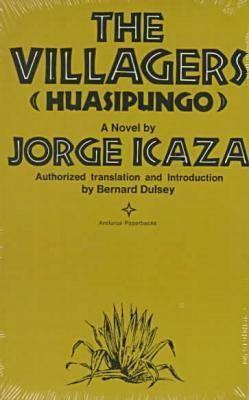
The Villagers (Huasipungo)
by Jorge Icaza (Translated by Bernard Dulsey)
Author(s) from:
Ecuador
Setting:
Ecuador
Original Language:
Spanish
First Publised:
1934
Description:
The Villagers is a story of the ruthless exploitation and extermination of an Indian village of Ecuador by its greedy landlord. It brought attention to the exploitation of Ecuador's indigenous people by Ecuadorian whites.
A realistic tale in the best tradition of the novels of social protest of Zola, Dostoevsky, José Eustasio Rivera, and the Mexican novels of the Revolution, The Villagers (Huasipungo) shocked and horrified its readers, and brought its author mingled censure and acclaim, when it was first published in 1934.
Deeply moving in the dramatic intensity of its relentless evolution and stark human suffering... His first novel, but not his first published work, The Villagers is still considered by most critics as Icaza's best, and it is widely acclaimed as one of the most significant works in contemporary Latin American literature.
Thirty years after its original publication in Ecuador, The Villagers still carries a powerful message for the contemporary world and an urgent warning. The conditions here portrayed prevail in these areas, even today. The Villagers is an indictment of the latifundista system and a caustic picture of the native worker who, with little expectation from life, finds himself a victim of an antiquated feudal system aided and abetted by a grasping clergy and an indifferent government.
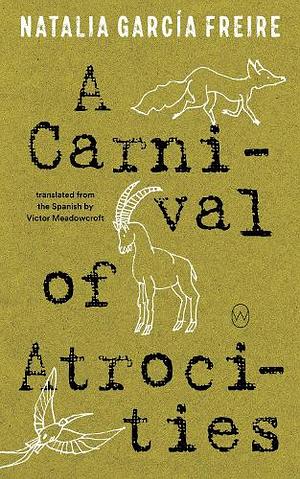
A Carnival of Atrocities
by Natalia García Freire (Translated by Victor Meadowcroft)
Author(s) from:
Ecuador
Setting:
desolate town nestled in the Ecuadorian Andes
Original Language:
Spanish
Publised:
2025
Description:
The residents of a desolate town nestled in the Ecuadorian Andes are forced to reckon with the legend of Mildred, a girl wronged by the town years ago.
Cocuán, a desolate town nestled between the hot jungle and the frigid Andes, is about to slip away from memory. This is where Mildred was born, and where everything she had--her animals, her home, her lands--was taken from her after her mother's death. Years later, a series of strange events, disappearances, and outbursts of collective delirium will force its residents to reckon with the legend of old Mildred. Once again, they will feel the shadow of death that has hung over the town ever since she was wronged. The voices of nine characters--Mildred, Ezequiel, Agustina, Manzi, Carmen, Víctor, Baltasar, Hermosina, and Filatelio--tell us of the past and present of that doomed place and Mildred's fate.
Natalia García Freire's vivid language blurs the lines between dreams and reality and transports the reader to the hypnotic Andean universe of Ecuador.
Other Books by the Author(s):
This World Does Not Belong to Us (2019)
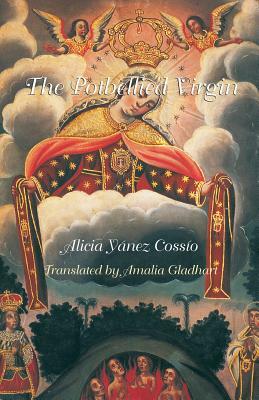
The Potbellied Virgin
by Alicia Yáñez Cossío (Translated by Amalia Gladhart)
Author(s) from:
Ecuador
Setting:
Unnamed town in the Ecuadorian Andes
Original Language:
Spanish
First Publised:
1985
Description:
In an unnamed town in the Ecuadorian Andes, a small wooden icon-La Virgen Pipona (the Potbellied Virgin)-conceals the documents that define the town's social history. That history recently has been dominated by the women of the Benavides family, a conservative clan and, not coincidentally, the caretakers of the Virgin. Their rivals are the Pandos, a family led by four old men who spend their days smoking in the park across from the Virgin's cathedral and offering revisionist versions of local and national events. When a military skirmish threatens the Virgin (and the secret in her famous belly), the Benavides women must scramble to preserve their place as local matriarchs-without alerting the old Pandos to the opportunity that might enable them to finally supplant their rivals.
One of Ecuador's foremost contemporary writers, Alicia Yánez Cossío illuminates the complexity of Andean society by placing disenfranchised players such as women and Amerindians onstage with traditional powers such as the military and the church. Folk wisdom, exemplified in The Potbellied Virgin by the beautifully translated proverbs so popular with the Benavideses and the Pandos alike, stands up to historical record. Such inclusiveness ultimately allows the whole truths of Yánez Cossío's subjects to emerge. Only the second of her novels to be translated into English, The Potbellied Virgin (La cofradía del mullo del vestido de la Virgen Pipona) is a funny, focused portrait of Ecuadorian life in the twentieth century.
Other Books by the Author(s):
Bruna and Her Sisters in the Sleeping City (1973)

Jawbone
by Mónica Ojeda (Translated by Sarah Booker)
Author(s) from:
Ecuador but moved to Spain to get her Masters degree and doctorate.
Setting:
???
Original Language:
Spanish
First Publised:
2018
Description:
"Was desire something like being possessed by a nightmare?"
Fernanda and Annelise are so close they are practically sisters: a double image, inseparable. So how does Fernanda end up bound on the floor of an abandoned cabin, kidnapped by one of her teachers and estranged from Annelise?
When Fernanda, Annelise, and their friends from Opus Dei Delta Academy for Girls convene after school, Annelise always spins the scariest stories and devises the riskiest games. Wearing her crocodile-jawbone crown, she leads them in rituals to her invented god: the rhinestone-encrusted firefly, the wandering womb, the mother pond of anacondas. Even more thrilling is the secret Annelise and Fernanda share, rooted in a dare that blurs the boundaries between affection and violence. Meanwhile, their literature teacher Miss Clara struggles to preserve her deteriorating sanity. Obsessed with imitating her dead mother and immobilized by past traumas, each day she edges nearer to a total break with reality.
Interweaving pop culture references and horror concepts drawn from from Herman Melville, H. P. Lovecraft, and anonymous "creepypastas," Jawbone is an ominous, multivocal novel that explores the terror inherent in the pure potentiality of adolescence and the fine line between desire and fear.
Cockfight
by María Fernanda Ampuero (Translated by Frances Riddle)
Author(s) from:
Ecuador - moved to Spain when she was around 28 years old.
Setting:
Ecuador?
Original Language:
Spanish
First Publised:
2018
Description:
This Ecuadorian short story collection explores domestic horrors and everyday violence, a "grotesque, unflinching" portrait of twenty-first-century Latin America (Publishers Weekly).
Named one of the ten best fiction books of 2018 by the New York Times en Español, Cockfight is the debut work by Ecuadorian writer and journalist María Fernanda Ampuero.
In lucid and compelling prose, Ampuero sheds light on the hidden aspects of the home: the grotesque realities of family, coming of age, religion, and class struggle. A family's maids witness a horrible cycle of abuse, a girl is auctioned off by a gang of criminals, and two sisters find themselves at the mercy of their spiteful brother. With violence masquerading as love, characters spend their lives trapped reenacting their past traumas.
Heralding a brutal and singular new voice, Cockfight explores the power of the home to both create and destroy those within it.
Poso Wells
by Gabriela Alemán (Translated by Dick Cluster)
Author(s) from:
Born in Brazil to Ecuadorian parents, she lived in several countries in her youth until she settled in Quito, Ecuador. She later also travelled to and live in many countries including the U.S. Switzerland, and Paraguay.
Setting:
???
Original Language:
Spanish
First Publised:
2007
Description:
In the squalid settlement of Poso Wells, women have been regularly disappearing, but the authorities have shown little interest. When the leading presidential candidate comes to town, he and his entourage are electrocuted in a macabre accident witnessed by a throng of astonished spectators. The sole survivor--next in line for the presidency--inexplicably disappears from sight.
Gustavo Varas, a principled journalist, picks up the trail, which leads him into a violent, lawless underworld. Bella Altamirano, a fearless local, is on her own crusade to pierce the settlement's code of silence, ignoring repeated death threats. It turns out that the disappearance of the candidate and those of the women are intimately connected, and not just to a local crime wave, but to a multinational magnate's plan to plunder the country's cloud forest preserve.